Imagine a concept: a student who virtually witnesses a volcanic eruption remembers it differently from one who reads about it. That is the case for virtual reality in schools. Recent research from PwC shows that VR learners are four times more focused and complete learning four times faster than their classroom peers.
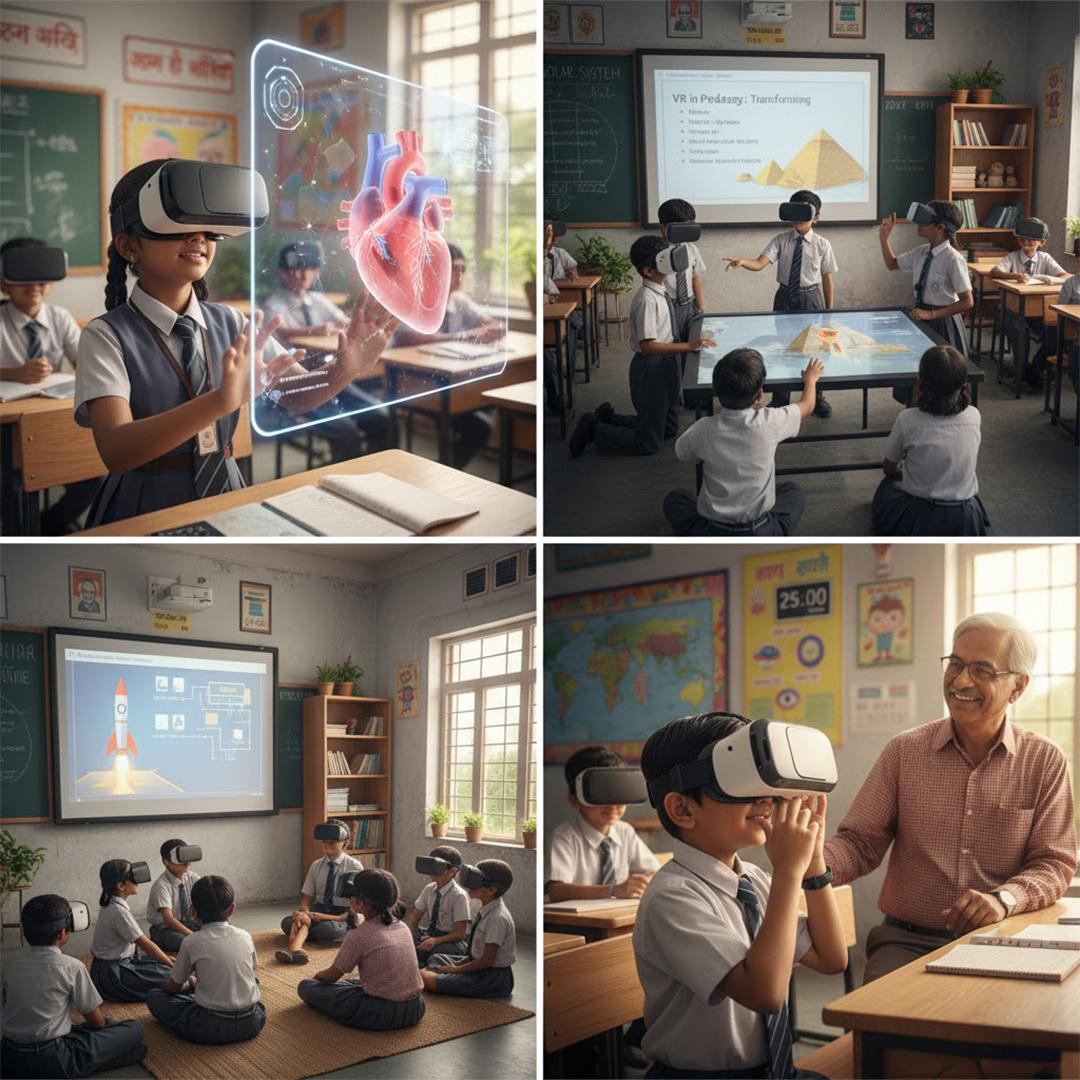
If you wonder how schools treat the concept of AR VR labs, the answer is: as future investments. But now the actual question is how to implement VR learning well, not whether it works.
Why Schools Are Investing in VR in 2026
The global VR education market is projected to reach $65.55 billion by the end of 2032.
Students using the concept of VR have found 75% higher knowledge retention than through traditional classrooms.
93% of teachers report VR improves teaching quality and student engagement.
A 2025 study reported an engagement effect size of 0.85, indicating a positive impact on student engagement. This is especially valuable in conveying immersive educational experiences.
Benefits of Virtual Reality in Schools
The concept of virtual reality in primary education has brought significant benefits to businesses. Below are some of them mentioned.
Students can successfully participate rather than observe. Brain activity in the field of VR is higher than in standard classrooms.
Virtual reality simplifies complex topics like biology, physics and history and makes learning easier.
Students are able to make well-informed choices when exploring suitable environments to gain a deeper understanding of reactions.
Students can perform experiments or experience severe weather conditions without any physical danger.
VR allows students to interact effortlessly with the ideas of AI, robotics, coding and AI labs to create a sophisticated STEM learning environment.
Virtual settings significantly aid optimal collaboration with flawless communication.
Students who enjoy a lesson engage more deeply. VR consistently turns routine periods into sessions students look forward to.
How Virtual Reality in the Field of Primary Education Helps Young Learners
Virtual reality in primary education works at each stage when content is designed to match the learner. For younger students:
AR works best at the primary level, overlaying better and digital content on familiar physical objects
VR environments are considered better suited to middle and high school students
Short, exploration-based sessions build focus and curiosity without overwhelming young learners
Age-appropriate content filters ensure every session is safe and curriculum-relevant
Challenges Schools Face and How to Solve Them
Many schools face challenges when applying virtual reality. Below are some of the aspects to solve the problems and to bring the best solutions.
Cost: VR becomes almost 52% cheaper than classroom training. Hence, starting with shared devices reduces upfront investment.
Teacher training: Structured training is included at setup, which means teachers need no technical background to run sessions.
Content selection: Curriculum-aligned content libraries eliminate the chances of guesswork and allow for automatic updates.
Infrastructure: Most existing rooms accommodate a well-organised VR lab with planned layout support.
Student safety: Age-appropriate filtering, session time limits, and correct usage of VR can ensure the safety of students.
Virtual reality in schools works the best because it actually changes what a student can learn during a lesson. Immersive learning is not just about a way of good teaching, but it also enhances students' skills. AR VR labs make that possible at scale, across every subject, and for every type of learner. The evidence is clear. Schools acting on it now give their students an advantage that compounds year after year.


No comments:
Post a Comment